
Gatekeeping in Clinical Psychology Training - Supervisors’ Responses to Suitability Doubts
Endre Visted1, Berge Osnes1, Helge Molde1, Jon Vøllestad1 & Signe Hjelen Stige1
1Department of Clinical and Biological Psychology, University of Bergen.
Background: Since 2006, suitability assessment has been a legally regulated process in the Norwegian cand. psychol. programme, intended to ensure safe and ethical psychological practice. However, no empirical studies have examined how supervisors in clinical psychology practicum settings in Norway experience and navigate suitability doubts about their students. Method: An electronic survey was distributed to supervisors at four Norwegian universities offering the cand. psychol. degree, including internal and external clinical placements. The survey assessed experiences with suitability doubts, triggers of concern, procedural knowledge, actions taken, emotional reactions and perceived institutional support. Results: In total, 53 supervisors participated, of whom more than half reported direct experience with suitability doubts. Doubts most frequently involved limited self-insight, poor collaboration, personal difficulties and resistance to supervision, whereas severe behaviours (e.g., threatening conduct) were rarely reported. Supervisors reported strong procedural knowledge but perceived institutional information and support as more variable. Internal supervisors reported significantly higher procedural knowledge and institutional support than external supervisors. Supervisors described a stepwise response pathway emphasising consultation and increased supervision before formal reporting. Managing doubts about suitability was described as emotionally demanding but also professionally meaningful. Conclusion: Suitability doubts appear to be a common feature of clinical psychology training in Norway, highlighting the need for clearer procedures, targeted training and stronger institutional support.
Keywords: suitability assessment, professional competence, clinical supervision, gatekeeping
Clinical psychology training programmes have a dual responsibility: developing students’ clinical competence while ensuring that graduates can practise safely and ethically with vulnerable populations (Stige et al., 2026). Whereas academic competencies can be assessed through examinations, suitability assessment requires judgements about interpersonal functioning, professional behaviour, ethical reasoning and emotional regulation in clinical practice. Suitability concerns often involve subtle and cumulative patterns, such as difficulties in collaboration, limited self-reflection or difficulty maintaining professional boundaries. Supervisors must also balance supporting students’ development with their gatekeeping responsibility to protect patients, particularly when simultaneously mentoring and evaluating the same students (DeCino et al., 2020). Despite its importance, suitability assessment remains understudied, and supervisors often report uncertainty about recognising, documenting and managing suitability concerns (Gizara & Forrest, 2004; Quinlan et al., 2025).
Clinical Psychology Training in Norway
Norwegian clinical psychology training consists of a six-year integrated professional programme (cand. psychol.) leading to independent licensure. A national curriculum (RETHOS) standardises learning outcomes across universities, integrating scientific training, clinical competence and supervised practice (Forskrift om nasjonal retningslinje for psykologutdanning, 2020). The programme follows the scientist-practitioner model (American Psychological Association, 1947; Forskrift om nasjonal retningslinje for psykologutdanning, 2020), and, as part of its broader curriculum, prepares students for independent clinical assessment, psychotherapy, and evaluation of treatment outcomes. Clinical training takes place in university outpatient clinics (internal clinics) and external placements, where students are expected to provide evidence-based care while demonstrating professional, relational and reflective competence.
Suitability Assessment in Clinical Psychology Training
Norwegian clinical psychology programmes are legally required to conduct ongoing suitability assessment alongside evaluations of academic and clinical competence. Suitability assessment is a nationally regulated process intended to ensure safe and ethical professional practice. It applies to 38 professional programmes, including clinical psychology (Universitets- og høyskoleforskriften, 2024). Internationally, comparable concerns are conceptualised as students with problems of professional competence (SPPC) in North America (Kaslow et al., 2007; Lease & Grus, 2023) and fitness to practise (FTP) in the United Kingdom and Australia (Barden & Caleb, 2020; Sofronoff et al., 2011). The Norwegian framework overlaps substantially with both, but we primarily draw on the psychology-specific SPPC framework because it aligns closely with the competence-oriented focus of the Norwegian curriculum (RETHOS).
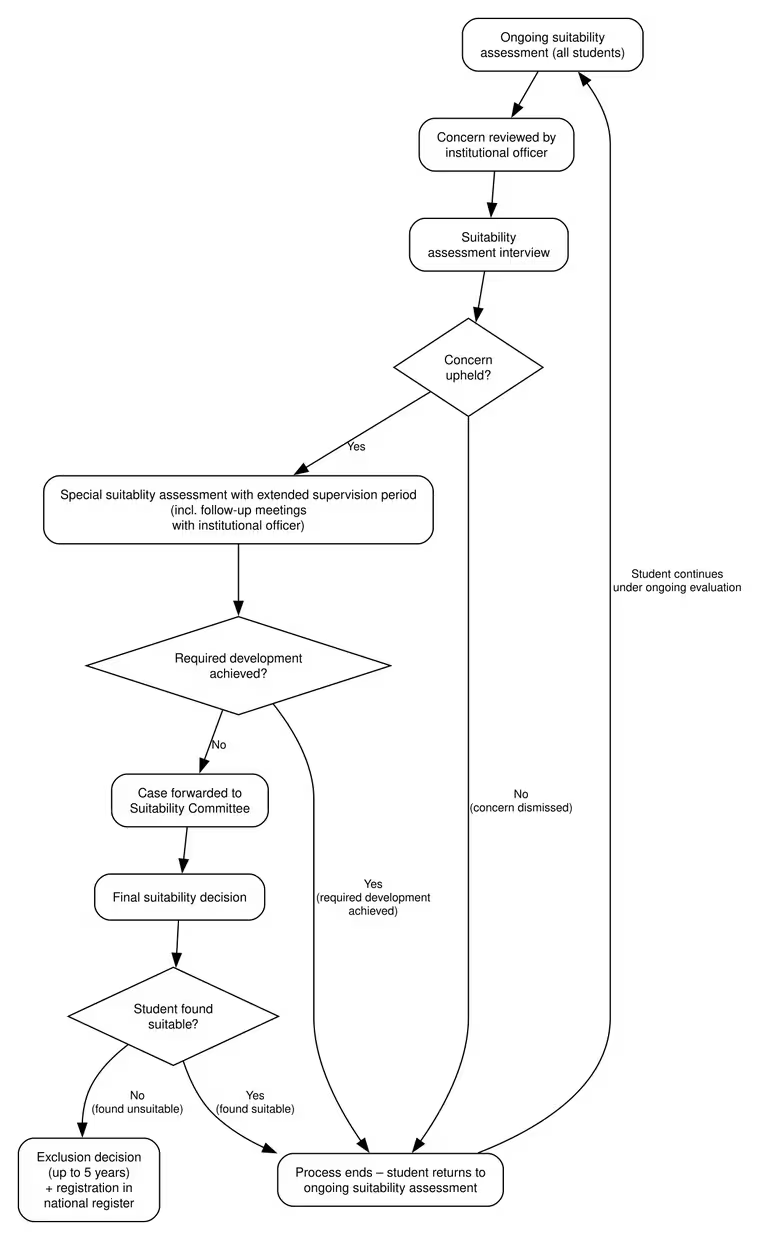
When supervisors develop suitability doubts, concerns are reported to the institution’s suitability officer, who evaluates the case and determines the appropriate follow-up, including developmental support or referral to the institutional suitability committee. Figure 1 provides a simplified overview of this process.
Figure 1
A flow diagram summarising the main stages of the suitability assessment process
Suitability Concerns and Suitability Doubts
In this study, SPPC refers to student characteristics or behaviours that may compromise safe and effective practice (Lease & Grus, 2023). Such problems may give rise to ‘suitability concerns’, and, when sufficiently serious to question readiness for independent practice, ‘suitability doubts’ that trigger formal suitability assessment.
Frequency of Suitability Doubts
The transition into clinical practice is a high-stress period, as students take on new professional roles, greater responsibility and direct patient contact (Nielsen et al., 2009). These demands may make signs of SPPC more visible than in classroom-based settings (Huprich & Rudd, 2004; Schwartz-Mette, 2009), while requiring supervisors to distinguish transient stress reactions from more persistent competence problems. However, little is known about how often Norwegian supervisors encounter or report suitability doubts. International studies indicate that SPPCs are a recurring feature of psychology training. Faculty report intervening with approximately 5.8% of trainees because of competence concerns (Gaubatz & Vera, 2006), and national surveys show that most educators have encountered at least one student with significant competence problems during training (Brown-Rice & Furr, 2013, 2016; Nicholson Perry et al., 2017). Similar findings have been reported by students evaluating their peers (Furr & Brown-Rice, 2018).
Characteristics Associated with Suitability Doubts
Beyond frequency, research has identified a broad range of characteristics that commonly trigger concern about professional competence. A synthesis of 14 studies identified intrapersonal problems (e.g., depression, anxiety and maladaptive personality traits) as the most common concerns, followed by interpersonal difficulties, clinical skill deficits, ethical violations and unprofessional behaviour (Brear et al., 2008). Subsequent studies have largely replicated this pattern, highlighting inadequate clinical and interpersonal skills, difficulties regulating emotions, poor professional attitudes, defensiveness to supervision, limited reflective capacity and mental health difficulties (Brown-Rice & Furr, 2016; Freeman et al., 2016; Nicholson Perry et al., 2017; Quinlan et al., 2025). Similar patterns have also been reported by psychology students evaluating their peers (Furr & Brown-Rice, 2018). Together, these findings suggest that competence concerns most often arise from persistent difficulties in personal functioning, interpersonal relationships, reflective capacity and professional behaviour, rather than isolated incidents of serious misconduct.
Procedural Knowledge and Institutional Support
Effective management of suitability doubts depends on supervisors’ procedural knowledge and institutional routines (Gaubatz & Vera, 2002). Evidence from Norwegian teacher education and other professional programmes suggests limited training, unclear responsibilities and uncertainty about suitability assessment procedures (Hvalby, 2022; Kommisrud et al., 2025; Naustdal & Gabrielsen, 2015). Similar challenges have been documented in clinical psychology training internationally, where supervisors describe insufficient training, unclear protocols and limited institutional support (Gizara & Forrest, 2004; Quinlan et al., 2025). Conversely, clear procedures increase supervisors’ confidence (DeJonge et al., 2025) and reduce ‘gate-slipping’, with fewer students with competence problems progressing without remediation (Gaubatz & Vera, 2002).
Few studies have examined supervisors’ responses to suitability concerns. Available evidence suggests that supervisors primarily consult colleagues, discuss concerns with students, increase supervision and, in Norway, contact faculty staff (Freeman et al., 2016; Kommisrud et al., 2025).
Emotional and Professional Reactions to Suitability Concerns
Supervising students with suitability concerns places emotional demands on supervisors, who must balance the roles of mentor, assessor and gatekeeper while supporting students and protecting patients and the profession (Berge et al., 2021). Previous studies describe gatekeeping as emotionally demanding, involving anxiety, frustration, moral distress, uncertainty, increased workload and limited institutional support (Brown-Rice & Furr, 2016; DeCino et al., 2020; Quinlan et al., 2025). However, emerging evidence also suggests that these experiences can be professionally meaningful, reinforcing supervisors’ commitment to ethical standards and increasing confidence over time (DeCino et al., 2020).
Research Purpose and Questions
Despite two decades of mandatory suitability assessment in Norwegian clinical psychology training, no empirical study has examined how supervisors experience and manage suitability doubts in clinical practice. The present study therefore investigated supervisors’ experiences of suitability assessment, combining quantitative survey data with qualitative responses to examine the frequency, characteristics, management and perceived support associated with suitability doubts. The study provides the first systematic evidence on suitability assessment in Norwegian clinical psychology training and identifies priorities for strengthening supervisor support and institutional procedures.
Methods
Recruitment and Participants
For recruitment, the first author contacted course leaders for courses that involve clinical psychological practice at all four universities in Norway that provided the cand. psychol. programme (University of Oslo, University of Bergen, University of Tromsø – Arctic University of Norway, and Norwegian University of Science and Technology) and asked them to distribute an electronic survey invitation to supervisors at both on- and off-campus clinical placements. All course leaders confirmed that the invitation was forwarded to the relevant supervisors. All invited supervisors based their evaluations on direct observation of students’ clinical work during ongoing supervision, often supported by review of recorded therapy sessions. More detailed information about the nature of clinical training and supervision is provided in S01.01 in the Supplementary Materials (PDF).
Survey
A survey was developed for this study to assess supervisors’ experiences with suitability doubts in clinical psychology training. It included items on the frequency and characteristics of suitability doubts, procedural knowledge, supervisory responses, emotional and professional reactions and demographic characteristics, together with open-ended questions. Details of the survey development and the Norwegian and English versions of the survey are provided in S01.02 and S02 in Supplementary Materials (PDF).
Statistical and Qualitative Analysis
Descriptive statistics are reported as n and percentages. Likert-scale items were summarised as the proportions endorsing low (1–2), mid (3) and high (4–5) response categories. Group differences were examined between (a) supervisors in internal versus external clinics and (b) supervisors with versus without experience of suitability doubts. Because responses were ordinal, between-group differences were tested using Mann–Whitney U tests, with false discovery rate (Benjamini–Hochberg) correction for multiple comparisons. Statistical analyses were conducted in Python (pandas, NumPy, SciPy).
Open-ended responses were analysed descriptively using content analysis (Graneheim & Lundman, 2004). Responses to each question were reviewed independently by the first and last author, recurring themes were identified inductively, and illustrative quotations were selected to contextualise the quantitative findings. See S01.03 in Supplementary Materials (PDF) for more information about the quantitative and qualitative analyses.
Ethical Considerations
The study was registered in and approved through the University of Bergen’s system for risk and compliance (RETTE; application number F4373). The project was also reviewed by the University of Bergen’s Data Protection Officer, who determined that the study did not involve personal or sensitive data and therefore did not require a data protection impact assessment or review by a research ethics committee. Informed consent was obtained from all participants before survey completion. Participation was voluntary, with the option to withdraw at any time without consequence.
Results
Participant Characteristics
A total of 53 supervisors consented to participate in the study. Based on information provided by the course leaders who distributed the survey invitation, a total of 131 supervisors were invited to participate. This constitutes a response rate of 40.5%. The majority of participants were women (n = 39; 73.6%), and the mean age of the sample was 48.42 years (SD = 9.5). Participants were experienced clinicians, with an average of 19.56 years of professional practice (SD = 8.07) and a mean of 7.2 years of supervision experience (SD = 6.97; range 0–28). Just over half of the supervisors were affiliated with university outpatient clinics, while 37.7% supervised students in external clinical placements; an additional 9.4% held supervisory roles in both settings. Nearly half of the respondents were affiliated with the University of Bergen (n = 26), followed by the Norwegian University of Science and Technology (n = 11), University of Tromsø – Arctic University of Norway (n = 11) and University of Oslo (n = 5).
Experience with Doubts About Suitability
Regarding supervisors’ experiences with doubts about suitability, 45.3% (n = 24) reported never having such doubts, 22.6% (n = 12) had experienced concerns about suitability once, another 22.6% (n = 12) had experienced it two to three times and 9.4% (n = 5) had experienced doubts four or more times. By contrast, only 26.4% (n = 14) of the total sample reported having submitted a formal concern report about a student’s suitability, whereas 73.6% (n = 39) had not done so. More than one third of the sample (35.8%; n = 19) had supervised a student undergoing a special suitability assessment. In total, 29 of the 53 supervisors (54.7%) were classified as having direct experience either submitting a concern report or encountering students about whom they had doubts.
Among the 29 supervisors with direct experience of doubts about suitability, most reported that doubt often arose early in supervision (75.9% agreed, 10.3% were neutral and 13.8% disagreed). Nearly half indicated that doubt arose only after the student had patient contact (48.3% agreed, 13.8% were neutral and 37.9% disagreed). Views on whether it takes a long time from doubt to reporting were mixed (31.0% agreed, 34.5% were neutral and 34.5% disagreed).
Concerns That Triggered Doubt
Supervisors most frequently reported that doubts about suitability were triggered by limited self-insight (79.3% often/very often), poor collaboration (55.2%), personal difficulties (e.g., mental health or substance use; 55.2%) and resistance to supervision (51.7%; see Table S01 in Supplementary Materials for full response distributions). Concerns related to students’ lack of empathy or care for patients (31.0%) and lack of professional skills (24.1%) were reported less frequently. Failure to create a safe, healthy environment (13.8%), ethical concerns (6.9%) and problems with accountability in patient work (6.9%) were relatively uncommon. No supervisors reported role-model failures or threatening/irresponsible behaviour as frequent triggers of doubt. Overall, the findings suggest that suitability concerns most often arise from difficulties in self-awareness, interpersonal functioning and responsiveness to supervision rather than from overt ethical violations or threatening behaviour.
Six supervisors provided additional comments that largely confirmed the predefined survey categories while adding further nuance. Several described communication difficulties, including limited interpersonal communication and insufficient Norwegian language proficiency that affected collaboration with patients and colleagues. Others highlighted rigidity in ethical reasoning, difficulties integrating supervision, professional conduct problems (e.g., punctuality and interactions with colleagues), limited self-insight and the need for unusually intensive supervision.
Knowledge and Support
Most supervisors reported strong procedural knowledge, with 79.2% agreeing that they knew where to seek help and whom to contact for advice, discussion and guidance. Approximately two thirds reported knowing relevant procedures when in doubt about a student’s suitability (67.9%) and feeling confident identifying lack of suitability (67.9%; see Table S02 in Supplementary Materials (PDF) for full response distributions).
Perceptions of institutional provision were less favourable: Only 56.6% agreed that the university provides sufficient information about suitability procedures and 54.7% that it provides sufficient support. Overall, supervisors reported stronger confidence in their own knowledge than in the support provided by their institutions.
Knowledge and perceived institutional support were compared between supervisors from external clinics (n = 19) and internal clinics (n = 28). Across all items, supervisors from internal clinics reported higher agreement than supervisors from external clinics, and these differences remained statistically significant after controlling for multiple comparisons (FDR-adjusted qs < .05). See Table 1 for an overview of the group comparisons.
Actions Taken in Cases of Doubt
When experiencing doubts about a student’s suitability, supervisors most frequently reported consulting colleagues (77.4%), contacting university staff (75.5%) and providing more supervision (75.5%; see Table S03 in Supplementary Materials for full response distributions). Implementing specific measures with the student (69.8%) and addressing concerns directly with the student (66.0%) were also common responses. Documentation was the least frequently endorsed action (54.7%).
We then compared supervisors with direct experience of suitability doubts (n = 29) and supervisors without such experience (n = 20–21; see Table 2). Supervisors who had previously encountered suitability concerns reported significantly more frequent engagement in several actions, including confronting the student directly, consulting colleagues, contacting university staff and providing additional supervision. No statistically significant group differences were observed for documenting concerns or implementing specific measures with the student.
Open-ended responses (n = 17) described a consistent escalation pathway from supportive supervision to formal procedures when concerns persisted. Supervisors typically described working directly and individually with the student through increased supervision, clearer learning goals and concrete action plans, while simultaneously consulting colleagues or university staff. Several also described documenting concerns, monitoring progress and, where available, consulting local suitability committees. Some respondents further highlighted uncertainty about procedures and documentation, whereas early collegial consultation and established institutional structures were viewed as facilitating appropriate handling of concerns.
Reactions Among Supervisors
Supervisors who had experienced suitability doubts most often reported worry about the students’ reactions (79.3%), fear of hurting or offending the student (72.4%) and uncertainty regarding appropriate action (62.1%; see Table S04 in Supplementary Materials). Concerns about the learning environment (55.2%) and feelings of frustration or irritation (51.7%) were also common, whereas guilt was rarely reported (17.2%). At the same time, positive reactions were common: Nearly all supervisors felt that addressing the concern meant they had done something important (96.6%). Large majorities reported feeling supported or acknowledged (82.8%), more confident as supervisors (82.8%) and that addressing the concern improved patient safety (79.3%). Many supervisors also reported a sense of relief (75.9%). Overall, the findings suggest that suitability concerns are experienced as both emotionally demanding and professionally meaningful.
Supervisors’ Wishes for University Support
When asked how their university could better support supervisors in handling suitability doubts, over half endorsed more information/training on suitability (54.7%) and clearer procedures/routines (54.7%). Fewer endorsed needs for legal/ethical advice (26.4%) and better support from leadership/administration (22.6%), and relatively few asked for better support from colleagues (17.0%). Overall, the responses indicate a wish for structured guidance and capacity building (particularly training and clearer procedures), with a smaller, but non-trivial, proportion expressing interest in access to legal/ethical consultation and institutional backing.
Thirteen supervisors provided comments regarding institutional support. Respondents consistently emphasised the need for clearer procedures, regular supervisor training and stronger institutional support. Several highlighted the importance of recognising the gatekeeping responsibility and described local suitability committees as valuable resources for early discussion of concerns. Others called for earlier and more systematic information sharing across courses and placements, with one external supervisor wishing the university had flagged concerns ‘before practice started, not after I had to raise it’. Supervisors also requested clearer guidance on managing suitability concerns, including additional supervision resources when needed. Several emphasised that patient safety and professional standards should take precedence over reluctance to raise concerns, while experienced supervisors described becoming more confident in addressing doubts over time. Overall, the comments point to the need for sustained training, earlier and transparent communication, and accessible institutional support to facilitate consistent gatekeeping.
Discussion
This is the first study to examine how supervisors in Norwegian clinical psychology training experience and manage suitability doubts. Suitability concerns were common (most involving reflective and interpersonal difficulties) and highlighted the importance of clear institutional procedures and support.
More than half of the supervisors had encountered suitability doubts, consistent with previous research (Brown-Rice & Furr, 2016; Nicholson Perry et al., 2017). Although many concerns emerged early in supervision, others became apparent only after students began working with patients, suggesting that some difficulties are only revealed under the demands of clinical practice (Huprich & Rudd, 2004; Schwartz-Mette, 2009).
Formal reporting was substantially less common than supervisors’ experience of suitability doubts. Several explanations are possible. First, it may indicate implementation challenges within the Norwegian suitability system, including unclear roles, limited preparedness and inconsistent practices (Hvalby, 2022; Kommisrud et al., 2025; Naustdal & Gabrielsen, 2015). Second, supervisors may intentionally delay formal action while distinguishing transient developmental difficulties from more persistent competence concerns and observing students’ responses to supervision. Third, it may reflect barriers described in the international gatekeeping literature. Brown-Rice and Furr (2016) describe the ‘empathy veil’, whereby empathy for students and commitment to their development may delay or discourage formal reporting. Similarly, Johnson et al. (2008) describe the ‘hot potato game’, in which concerns are passed to later stages of training in the hope that difficulties will resolve or be addressed by others. Combined with uncertainty about reporting thresholds and institutional follow-up (Quinlan et al., 2025), these factors may explain why supervisors recognise concerns without initiating formal procedures. Rather than reflecting indifference, the findings illustrate the inherent complexity of balancing student development, fairness and gatekeeping responsibilities.
Suitability doubts most often involved limited self-insight, poor collaboration, personal difficulties and resistance to supervision, closely mirroring international findings (Brear et al., 2008; Brown-Rice & Furr, 2016; Freeman et al., 2016; Quinlan et al., 2025). In contrast, overt safety concerns were uncommon, suggesting that supervisors more often navigate subtle competence difficulties than clear misconduct.
Although most supervisors reported knowing how to respond when concerns arose, perceptions of institutional information and support were more variable. Supervisors in university-operated clinics reported greater procedural knowledge and support than those in external placements, consistent with previous research (Gizara & Forrest, 2004; Hvalby, 2022; Naustdal & Gabrielsen, 2015; Quinlan et al., 2025; Sofronoff et al., 2011). This may reflect closer integration with university procedures, whereas external supervisors often balance supervision with full clinical workloads, making suitability assessment difficult to prioritise (Kommisrud et al., 2025). External supervisors may also be less familiar with the regulatory framework or view formal suitability assessment primarily as the university’s responsibility. Although speculative, these findings suggest that effective suitability assessment depends not only on institutional procedures and support, but also on supervisors recognising gatekeeping as part of their professional role. Supervisors with previous experience of suitability doubts also reported greater procedural knowledge, suggesting that familiarity currently develops through experience rather than systematic training.
Supervisors primarily responded through collegial consultation, increased supervision, direct discussion with students and contact with university staff, broadly consistent with previous findings (Freeman et al., 2016; Kommisrud et al., 2025). The findings suggest a stepwise escalation process in which supportive remediation precedes formal reporting. While developmentally appropriate, relatively limited documentation may reduce continuity, transparency and institutional accountability, highlighting the importance of clear procedures and shared expectations to support timely and well-documented gatekeeping practices (Gaubatz & Vera, 2002).
Consistent with previous research (DeCino et al., 2020; Quinlan et al., 2025), supervisors reported worry about students’ reactions, fear of causing harm or offence, and uncertainty about how to proceed. Many also reported relief, increased confidence and a sense of having done something important, suggesting that gatekeeping may reinforce professional identity and ethical commitment despite its emotional demands.
Finally, supervisors requested clearer procedures, more training, better communication and stronger institutional support, particularly across courses and placements. These requests align closely with evidence that formalised procedures strengthen gatekeeping and reduce gate-slipping (Gaubatz & Vera, 2002).
Implications
The findings support systematic supervisor training covering reporting thresholds, documentation and institutional procedures rather than relying on experience alone. The lower procedural knowledge among external supervisors also highlights the need for stronger integration with university systems. Because suitability concerns typically involved subtle relational and reflective difficulties rather than overt misconduct, universities may benefit from structured supervisory tools and behaviourally anchored indicators that support early identification and feedback. Clearer procedures, training and communication may strengthen gatekeeping and ultimately enhance patient safety and professional standards.
Limitations and Future Studies
Several limitations should be considered. First, the modest sample size and response rate (40.5%) introduce the possibility of self-selection bias, with supervisors particularly interested in suitability assessment potentially being overrepresented. Nearly half of the respondents were affiliated with the University of Bergen, which may limit the generalisability of the findings. Second, the study relied on self-report data, which are subject to recall bias, social desirability and differences in interpretation. Third, although the study was informed by the SPPC literature and Norwegian suitability regulations, item selection inevitably reflected these frameworks, and alternative conceptualisations of suitability (e.g., FTP) may have emphasised somewhat different aspects of professional functioning.
Future research should examine suitability assessment longitudinally to understand how doubts develop and influence supervisory decisions over time. Qualitative interview studies may further illuminate how supervisors distinguish developmental difficulties from persistent competence problems, understand their responsibility for suitability assessment and navigate the tension between mentoring and gatekeeping. Comparative studies across professions and countries would also help clarify how regulatory frameworks and institutional context shape suitability assessment.
Conclusion
This study provides the first empirical evidence on how supervisors in the Norwegian cand. psychol. programme experience and manage suitability assessment. Suitability concerns were a recurring feature of clinical supervision, most commonly involving reflective, interpersonal and professional competence rather than overt misconduct. Although supervisors generally reported confidence in handling such concerns, institutional support varied, particularly between internal and external clinical placements.
The findings suggest that effective suitability assessment depends not only on legal regulations but also on clear procedures, supervisor training and accessible institutional support. Strengthening these elements may promote more consistent gatekeeping, support supervisors in complex decision-making and ultimately protect patients, students and the integrity of the profession.
References
American Psychological Association. (1947). Committee on training in clinical psychology. Recommended graduate training program in clinical psychology. American Psychologist, 2(12), 539–558. https://doi.org/10.1037/h0058236
Barden, N., & Caleb, R. (2020). Fitness to practise. In R. Tribe & J. Morrissey (Eds.), The Handbook of Professional Ethical and Research Practice for Psychologists, Counsellors, Psychotherapists and Psychiatrists (pp. 130–142). Taylor & Francis Group.
Berge, T., Brenna, E., Fossum, L. R., Hyldmo, I., Rydningen, N. N., Røv, L. G., Skiaker, M., Stubberud, I., & Engedal, M. G. (2021). Veileder og portvokter [Supervisor and Gatekeeper]. Tidsskrift for Norsk psykologforening, 58(3), 172–175. www.psykologtidsskriftet.no/artikkel/2021as02ae-Veileder-og-portvokter
Brear, P., Dorrian, J., & Luscri, G. (2008). Preparing our future counselling professionals: Gatekeeping and the implications for research. Counselling and Psychotherapy Research, 8(2), 93–101. https://doi.org/10.1080/14733140802007855
Brown-Rice, K. A., & Furr, S. (2013). Preservice Counselors' Knowledge of Classmates' Problems of Professional Competency. Journal of Counseling & Development, 91(2), 224–233. https://doi.org/10.1002/j.1556-6676.2013.00089.x
Brown-Rice, K., & Furr, S. (2016). Counselor educators and students with problems of professional competence: A survey and discussion. Professional Counselor, 6(2), 134–146. https://doi.org/10.15241/kbr.6.2.134
DeCino, D. A., Waalkes, P. L., & Dalbey, A. (2020). “They stay with you”: Counselor educators’ emotionally intense gatekeeping experiences. The Professional Counselor, 10(4), 548–561. https://doi.org/10.15241/dad.10.4.548
DeJonge, B., Rubel, D., & Shi, Y. (2025). Gatekeeping as an online adjunct clinical instructor in counselor education. Journal of Counselor Preparation and Supervision, 19(1). https://doi.org/10.70013/v0dopsmn
Forskrift om nasjonal retningslinje for psykologutdanning. (2020). Forskrift om nasjonal retningslinje for psykologutdanning [Regulation on national guidelines for psychology education] (FOR-2020-01-03-16). Lovdata. https://lovdata.no/dokument/LTI/forskrift/2020-01-03-16
Freeman, B. J., Garner, C. M., Fairgrieve, L. A., & Pitts, M. E. (2016). Gatekeeping in the field: Strategies and practices. Journal of Professional Counseling: Practice, Theory & Research, 43(2), 28–41. https://doi.org/10.1080/15566382.2016.12033954
Furr, S., & Brown-Rice, K. (2018). Psychology doctoral students perceptions of peers’ problems of professional competency. Training and Education in Professional Psychology, 12(2), 118–124. https://doi.org/10.1037/tep0000184
Gaubatz, M. D., & Vera, E. M. (2002). Do Formalized Gatekeeping Procedures Increase Programs' Follow-Up With Deficient Trainees? Counselor Education and Supervision, 41(4), 294–305. https://doi.org/10.1002/j.1556-6978.2002.tb01292.x
Gaubatz, M. D., & Vera, E. M. (2006). Trainee Competence in Master's-Level Counseling Programs: A Comparison of Counselor Educators' and Students' Views. Counselor Education and Supervision, 46(1), 32–43. https://doi.org/10.1002/j.1556-6978.2006.tb00010.x
Gizara, S. S., & Forrest, L. (2004). Supervisors' Experiences of Trainee Impairment and Incompetence at APA-Accredited Internship Sites. Professional Psychology: Research and Practice, 35(2), 131–140. https://doi.org/10.1037/0735-7028.35.2.131
Graneheim, U. H., & Lundman, B. (2004). Qualitative content analysis in nursing research: concepts, procedures and measures to achieve trustworthiness. Nurse Education Today, 24(2), 105–112. https://doi.org/10.1016/j.nedt.2003.10.001
Huprich, S. K., & Rudd, M. D. (2004). A national survey of trainee impairment in clinical, counseling, and school psychology doctoral programs and internships. Journal of Clinical Psychology, 60(1), 43–52. https://doi.org/10.1002/jclp.10233
Hvalby, M. (2022). Profesjonell dømmekraft i skikkethetsvurdering [Professional Judgement in Suitability Assessment]. Uniped, 45(1), 53–63. https://doi.org/10.18261/uniped.45.1.6
Johnson, W. B., Elman, N. S., Forrest, L., Robiner, W. N., Rodolfa, E., & Schaffer, J. B. (2008). Addressing professional competence problems in trainees: Some ethical considerations. Professional Psychology: Research and Practice, 39(6), 589–599. https://doi.org/10.1037/a0014264
Kaslow, N. J., Rubin, N. J., Forrest, L., Elman, N. S., Van Horne, B. A., Jacobs, S. C., Huprich, S. K., Benton, S. A., Pantesco, V. F., Dollinger, S. J., Grus, C. L., Behnke, S. H., Miller, D. S. S., Shealy, C. N., Mintz, L. B., Schwartz-Mette, R., Van Sickle, K., & Thorn, B. E. (2007). Recognizing, assessing, and intervening with problems of professional competence. Professional Psychology: Research and Practice, 38(5), 479–492. https://doi.org/10.1037/0735-7028.38.5.479
Kommisrud, K., Eriksen, H. G., Hovik, K. T., Hovland, J. E., & Sønderskov, M. (2025). Ressurser, ubehag og motvilje – om løpende skikkethetsarbeid i et spenningsfelt [Resources, Discomfort and Reluctance – On Continuous Suitability Assesment in a Field of Tension]. Nordisk tidsskrift for utdanning og praksis, 19(3). https://doi.org/10.23865/up.v19.6181
Lease, S. H., & Grus, C. L. (2023). Problems of professional competence. In Supporting trainees with competence problems: A practical guide for psychology trainers. (pp. 43–60). American Psychological Association.
Naustdal, A.-G., & Gabrielsen, E. (2015). Den viktige og vanskelige skikkethetsvurderingen; hvilke utfordringer gir den universiteter og høgskoler? [The important and difficult suitability assessment: What challenges does it pose for universities and university colleges?] Uniped, 38(1), 8–22. https://doi.org/10.18261/ISSN1893-8981-2015-01-02
Nicholson Perry, K., Donovan, M., Knight, R., & Shires, A. (2017). Addressing Professional Competency Problems in Clinical Psychology Trainees. Australian Psychologist, 52(2), 121–129. https://doi.org/10.1111/ap.12268
Nielsen, G. H., Vøllestad, J., Schanche, E., & Birkeland Nielsen, M. (2009). Får jeg det til? En kartlegging av studentterapeuters bekymringer [Can I handle it? A mapping of student therapists' worries]. Tidsskrift for Norsk psykologforening, 43(2), 240–245. https://www.psykologtidsskriftet.no/artikkel/2009as03ae-Far-jeg-det-til-En-kartlegging-av-studentterapeuters-bekymringer
Quinlan, E., Collison, J., Deane, F. P., Gooi, C. H., & Paparo, J. (2025). Educator experiences with postgraduate psychology students exhibiting professional competence issues. Ethics & Behavior, 35(4), 277–295. https://doi.org/10.1080/10508422.2024.2370780
Schwartz-Mette, R. A. (2009). Challenges in Addressing Graduate Student Impairment in Academic Professional Psychology Programs. Ethics & Behavior, 19(2), 91–102. https://doi.org/10.1080/10508420902768973
Sofronoff, K., Helmes, E., & Pachana, N. (2011). Fitness to Practice in the Profession of Psychology: Should We Assess this During Clinical Training? Australian Psychologist, 46(2), 126–132. https://doi.org/10.1111/j.1742-9544.2011.00031.x
Stige, S. H., Visted, E., Schanche, E., & Vøllestad, J. (2026). Mapping core competencies for clinical psychologists: A qualitative meta-analysis of nine international standards and accreditation documents. Clinical Psychology: Science and Practice, 33(2), 214–227. https://doi.org/10.1037/cps0000329
Universitets- og høyskoleforskriften. (2024). Forskrift til universitets- og høyskoleloven (universitets- og høyskoleforskriften) [Regulations to the Universities and University Colleges Act] (FOR-2024-06-28-1392). Lovdata. https://lovdata.no/dokument/SF/forskrift/2024-06-28-1392/KAPITTEL_7#KAPITTEL_7